
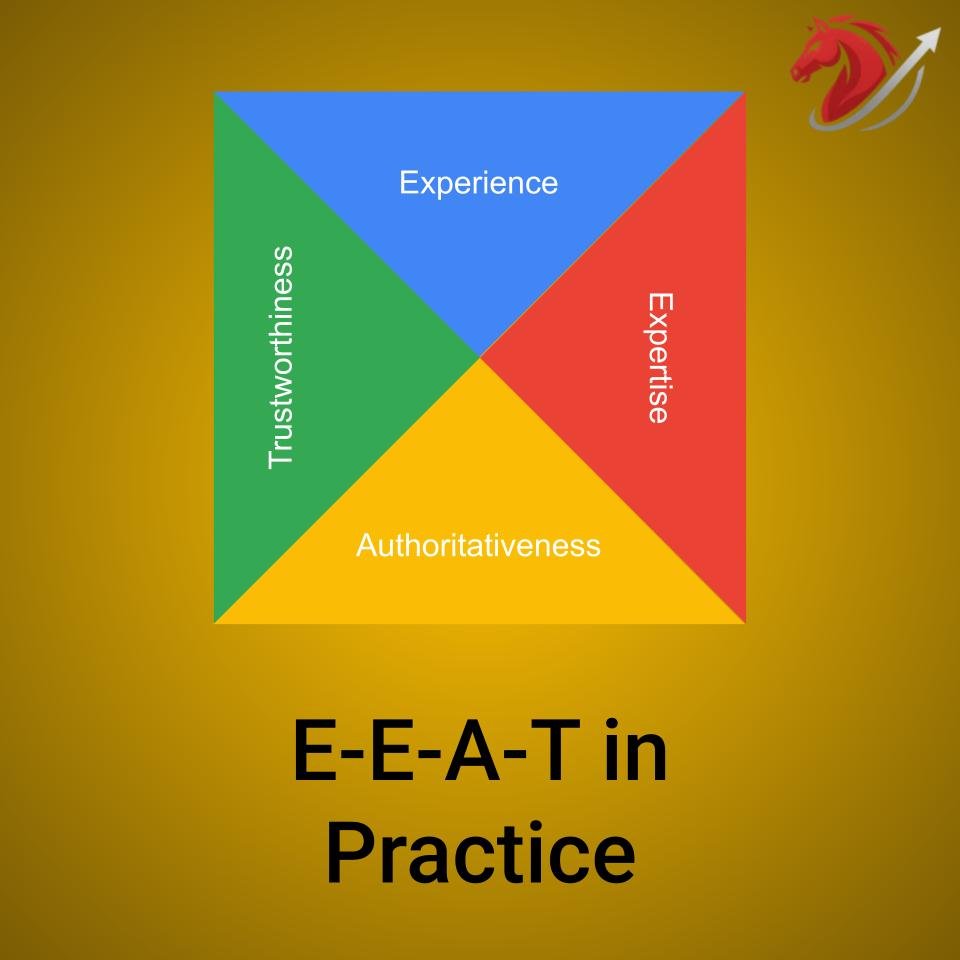
Implementing E‑E‑A‑T influences SEO because it helps your pages look more helpful and reliable to users—and that matches what Google says its automated ranking systems are designed to prioritize. E‑E‑A‑T isn’t a single ranking “toggle,” but Google does say its systems use a mix of signals to identify content that demonstrates experience, expertise, authoritativeness, and trustworthiness, with trust being the most important aspect.
While E-E-A-T demonstrates the nature of the content and the high-authority references, we must take care of the essential SEO aspects that an Organic Search Engine Optimization Company implements.
Where E‑E‑A‑T came from (and why it got popular)
E‑E‑A‑T comes from Google’s Search Quality Rater Guidelines ecosystem, where “E‑A‑T” (Expertise, Authoritativeness, Trustworthiness) was used as a way to evaluate whether Google’s ranking systems are producing helpful, relevant information. In December 2022, Google updated the rater guidelines to add an extra “E” for Experience, explicitly recognizing that first-hand involvement (using a product, visiting a place, living through something) is often what people value most—especially for reviews and practical advice.
It became popular in SEO because it gave the industry a language to explain what “quality” looks like beyond keywords and backlinks, especially for YMYL topics (health, finance, safety) where Google says it gives more weight to content that aligns with strong E‑E‑A‑T. Google also encourages creators to self-assess content quality and to think in terms of “Who, How, and Why,” which made E‑E‑A‑T a practical framework teams could actually operationalize.
How important it is (and what it is not)
E‑E‑A‑T is important because it aligns your content with the direction Google says its systems aim for: helpful, reliable information made primarily for people—not content made mainly to manipulate rankings. Google is also clear that E‑E‑A‑T itself “isn’t a specific ranking factor,” but using factors that help identify good E‑E‑A‑T is useful, and it matters more in YMYL topics.
Equally important: Google explicitly says “SEO can be a helpful activity when it is applied to people-first content,” which means E‑E‑A‑T does not replace basic SEO (indexing, crawlability, titles, internal links, page experience). In other words: E‑E‑A‑T is the credibility layer; basic SEO is the delivery system.
1) Experience (E)
Definition: Experience is proof you’ve actually done the thing—used the product, run the test, visited the place, or lived the process. Google’s guidance highlights first-hand experience as something people may value most in certain cases (for example, product reviews).
Implementation ideas (practical):
- Add “how we tested” sections, original screenshots/photos, raw observations, constraints, and dated updates (so it’s clearly lived, not rewritten).
- Make “How” obvious: what you did, with what inputs, and why that method is reasonable.
An example of our client:
A local HVAC company publishes a “7-day summer AC breakdown diary (115°F week)” including thermostat logs, parts replaced, what failed first, and photos of each service visit; it starts ranking for “AC keeps freezing at night” and “AC short cycling fix,” earns natural links from local forums, and converts better because visitors can see real-world evidence.
2) Expertise (E)
Definition: Expertise is demonstrated competence—accurate knowledge presented in a way that makes people want to trust it, supported by sourcing, and ideally tied to a clearly identified author/site.
Implementation ideas (practical):
- Add clear bylines and author pages (“Who”), include credentials where relevant, and cite primary sources for claims that can be verified.
- Avoid vague advice; show decision criteria and methodology so your guidance is reproducible.
Real time example:
A nutrition clinic creates a “PCOS meal planning framework” written and reviewed by credentialed practitioners, with a transparent intake methodology and citation-backed explanations; it wins featured snippets for definitional queries, gets referenced by other wellness sites, and improves lead quality because the content filters for serious users.
3) Authoritativeness (A)
Definition: Authoritativeness is reputation—recognition that your site/brand/author is a known source in the topic area. Google’s documentation frames it partly as what someone would find if they researched the site and whether it seems widely recognized as an authority on that topic.
Implementation ideas (practical):
- Build depth: pillar pages + supporting clusters that cover a topic comprehensively (so your site has a clear purpose/focus).
- Earn citations/mentions by publishing things others need to reference: original datasets, tools, benchmarks, or unique processes.
How we are building authority for one of our client:
We publish a quarterly “phishing kit price index” with methodology and downloadable data for a cybersecurity SaaS. Industry newsletters and bloggers cite it, and the site’s entire email-security cluster lifts because Google sees stronger reputation signals and the topic footprint becomes unmistakable.
4) Trust (T)
Definition: Trust is the deciding layer—Google explicitly says trust is the most important part of E‑E‑A‑T. If users can’t trust the page, the rest doesn’t matter.
Implementation ideas (practical):
- Make trust visible: About page, contact details, editorial policy, privacy/refund policies, clear ads/affiliate disclosures, accurate dates, and correction/update notes.
- Improve “overall great page experience” (Google advises not to focus on only one or two aspects, but the whole experience).
How one of our connection is working to build trust:
A “best VPN” affiliate site adds full ownership disclosure, hands-on test notes, clear pricing tables with update history, and a policy explaining how rankings are decided; over time it earns more returning users and more brand searches, which improves CTR and stability through updates because the page feels safer to rely on.
What changed in the AI era (without changing the core)
Google’s 2022 update made the “Experience” component explicit and also emphasized that helpful information can come in many formats and from a range of sources—so being credible isn’t only “write long text,” it’s “show evidence and be useful in the format users need.” Google’s people-first content documentation also recommends being transparent about “Who, How, and Why,” including disclosing automation/AI where users would reasonably expect it.
What matters more now (and what’s losing value)
More important now: Original information, reporting, research, and “substantial additional value” (not just rewriting) are directly called out in Google’s self-assessment questions. Clear sourcing, author transparency, and evidence of first-hand expertise are also highlighted as ways to build trust.
Losing value: “Search engine-first” content patterns—mass-produced pages, rewriting without adding value, chasing word counts, or producing content mainly to attract search visits—are listed by Google as warning signs that you’re not aligned with what their systems seek to reward.
If you want, I can rewrite your “Live SEO examples” so they read like case snapshots (setup → actions → proof → result) while staying compliant (no unverifiable claims, clearer methodology, and better E‑E‑A‑T signals baked into the narrative).