
If your organic traffic dropped at any point in 2025, one of four algorithm updates almost certainly explains why — and more importantly, each one has a clear, actionable fix.
Google rolled out four major algorithm updates throughout 2025, each reshaping how pages are ranked. This article breaks down exactly what changed in each update, shows you real examples of who got hit and why, and gives you specific steps to recover or protect your rankings going forward.
Written: February 26, 2026
Author: Rahul Goel | 12+ years SEO experience | Google & SEMrush Certified | 9 total certifications
Declaration: This article was originally conceived and written by our human expert. Sections were refined with AI assistance for clarity. All content has been reviewed, fact-checked, and approved by the named author before publication.
Why These Updates Matter More Than Usual
Google adjusts its algorithm thousands of times per year, but most changes are minor recalibrations. The four 2025 updates were different. Each one targeted a specific quality problem that had been building for years: thin authorship, AI-generated summaries masquerading as insight, link manipulation, and content neglect.
Together, they represent Google’s most sustained push toward authentic, human-backed content since the 2018 Medic Update — which first made E-E-A-T (Experience, Expertise, Authoritativeness, Trustworthiness — Google’s framework for evaluating content quality) a mainstream SEO priority. If you are managing your own SEO or working with an Organic Search Engine Optimization Company, understanding each update is not optional in 2026 — it is the baseline.
1. The March 2025 Core Update
Rolled out: March 13–27, 2025
What Changed
The March update drew a hard line around one question: Who actually wrote this? For years, anonymous bylines and vague “Staff Writer” credits had been tolerated. That ended in March 2025. Three specific signals shifted simultaneously.
Author transparency became non-negotiable. Google began weighing author reputation directly. Pages without a clearly identified author — backed by real credentials and a verifiable background — faced ranking declines. Publishing well-researched content was no longer sufficient; Google now asked: who is the real person standing behind this?
Repetitive AI writing patterns got flagged. Content following predictable AI sentence structures — technically correct but emotionally flat — saw visibility drops. Google became significantly better at identifying writing patterns that signal machine generation without genuine human perspective.
Experience within E-E-A-T got a meaningful upgrade. The Experience element of Google’s quality framework suddenly carried far more weight. Pages with no personal observations, no real-world examples, and no first-hand knowledge struggled to hold their positions.
Simple analogy: Think of a restaurant review. One that says “the pasta was well-made with appropriate seasoning and the service met expectations” reads like it was written by someone who never visited. But “the carbonara arrived with too much pepper and the waiter comped our dessert after I mentioned it” — that is someone who was actually there. The March update taught Google to tell the difference.
Real-World Example — Quora
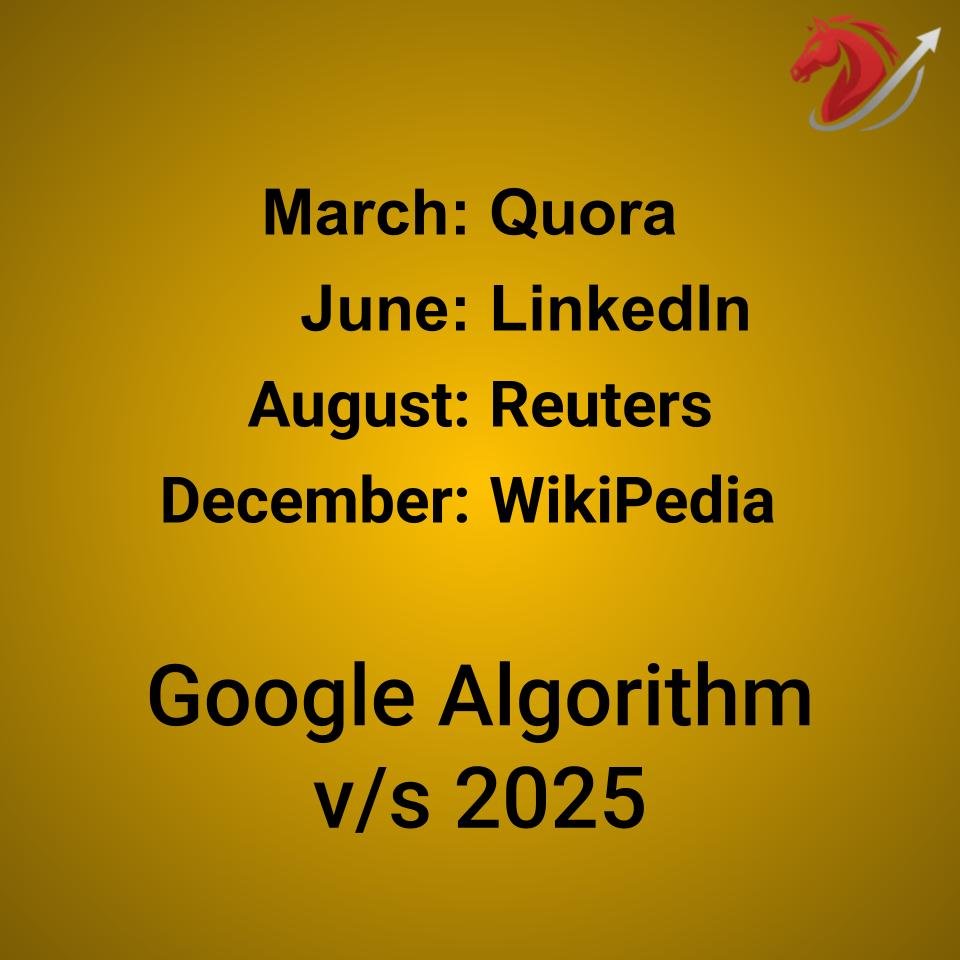
Quora had long been a reliable visibility channel, appearing in top results for thousands of informational queries. After the March update, Quora saw measurable reductions in search visibility. The reason is structural: Quora allows pseudonyms as profile names. Thousands of its highest-voted answers are tied to usernames like “Curious_Mind_42” — no verifiable identity, no credentials, no way for Google to assess genuine expertise. This directly violated the author transparency signal the March update elevated. Quora’s model — valuable community knowledge buried behind unverifiable identities — became a liability overnight.
What You Should Do
- Add a named author byline to every article, linked to a dedicated author bio page that includes professional background, credentials, and links to external profiles (LinkedIn, professional associations, published work)
- Audit your top 20 pages for anonymous authorship — pages on health, finance, legal, or service topics are highest priority
- Replace AI-default sentence structures with concrete, specific observations — one real example, one real outcome, or one first-hand detail per section turns generic content into genuine content
- For YMYL topics (health, finance, legal), have a qualified expert review the content and credit them visibly on the pageSelf-check: Can a reader — or Google — tell exactly who wrote your page, what qualifies them, and where else their work can be verified? If not, that is where you start.
2. The June 2025 Core Update
Rolled out: June 30–July 17, 2025
What Changed
The June update was a broad rebalancing of authority signals — specifically targeting how Google distinguishes genuine topical depth from surface-level coverage.
Long-tail query volatility spiked. Informational searches with specific, longer query strings — the kind typed by someone doing real research — saw dramatic ranking fluctuations. Pages that had comfortably held top positions for years found themselves displaced by newer, more specific content.
AI summaries without original perspective got crushed. Content that combined information from other sources without adding anything new lost significant ground. Google got meaningfully better at distinguishing between content that synthesizes information with genuine insight versus content that simply restates it with better formatting.
Template fatigue hit SEO-optimized articles. The perfectly structured, keyword-dense formula — introduction, three H2s, bullet list, conclusion — lost ground to content genuinely written for human readers. Google identified the structural fingerprint of content written for search engines rather than people.
Brand authority vs. topical authority rebalanced. This was the most significant shift. Previously, a recognizable brand name provided a ranking buffer even when its content on a specific subject was thin. After June, that buffer shrank considerably. A smaller site run by a genuine domain expert could outrank an established brand if its depth on a specific subject was demonstrably stronger.
Topical authority — a term worth defining clearly — means covering a subject comprehensively: not just the obvious keywords, but every related question, subtopic, and use case a real person in your niche would search for. A pillar page on your core topic, supported by cluster articles on every subtopic, signals to Google that your site is a complete resource.
Internal link manipulation got flagged. Aggressive internal linking patterns designed to funnel authority to specific pages became detectable and were discounted.
Simple analogy: Imagine two doctors. The first works at a famous hospital and knows a little about everything. The second is a specialist who has spent 15 years on one specific condition, has published original research, and runs a blog where every article goes 10 layers deep into that subject. If your question is specifically about that condition, the specialist is more valuable — brand name be damned. That is the rebalancing Google made in June 2025.
Real-World Examples
LinkedIn (traffic drop): LinkedIn saw a decline in search visibility after the June update. Two factors combined: the brand-vs-topical authority rebalancing reduced LinkedIn’s buffer for generic career advice content, and the platform had accumulated large volumes of AI-generated posts without meaningful original perspective — exactly the pattern the update targeted.
IMDB (traffic gain): IMDB benefited from the same update. As a platform with deep topical focus exclusively on entertainment — comprehensive structured data on films, actors, and ratings — it demonstrated strong topical authority in its niche. The update rewarded concentrated expertise over broad brand recognition.
What You Should Do
- Build a pillar-cluster content structure. Pick your most important topic. Create one comprehensive pillar page, then build 10–20 supporting cluster articles on every related subtopic and question. Link them together with clear internal links — this tells Google your site covers the subject from every angle
- Run a content gap audit using Ahrefs or Semrush to find questions your audience searches for that your site does not currently answer. Every gap is a missed authority signal
- Remove or consolidate thin pages — old posts that cover a topic at surface level without adding original perspective dilute your topical authority signal
- Stop over-optimizing internal links. Internal links should help users navigate naturally — not channel authority to specific pagesSelf-check: If someone researched your core topic for 30 minutes using only your site, would they find complete answers — or would they need to leave and search elsewhere? If they would leave, your topical authority has gaps.
3. The August 2025 Spam Update
Rolled out: August 2025, with a second wave around September 9
What Changed
Unlike the broader core updates, the August rollout was explicitly spam-focused — narrower in scope but faster and more aggressive. Many affected sites noticed ranking drops within 24 hours of rollout, with a second wave of disruption around September 9 triggering further fluctuations and some indexing issues.
Manipulation tactics were directly targeted. Three specific patterns got flagged:
- Private blog networks (PBNs) — networks of fake websites created specifically to point backlinks at a target site — lost whatever remaining ranking power they had
- Sneaky redirects — sending users to a different page than what was shown to Google — became detectable at a new level
- Cloaking — showing Google different content than what real users see — was flagged more precisely than before
Low-value pages inside high-trust domains got exposed. This was the more surprising element. Many established, high-authority sites had been quietly accumulating low-quality pages in their less-visited sections — old blog posts from 2015 never updated, category pages with minimal content, thin informational pages riding on overall domain authority. The August update changed the calculation: weak pages began pulling down rankings for the rest of the site, not just their own position.
Simple analogy: Imagine a respected law firm with a 50-year reputation for excellence — but one storage room in the basement full of sloppy, unreviewed documents. The firm’s reputation protects the main offices. But when an auditor finally checks the whole building, that basement affects the firm’s overall compliance rating. The August update was that audit.
Real-World Example — Reuters
Reuters, one of the world’s most recognizable news agencies, saw content quality signals weaken after this update. Many Reuters articles are intentionally short — designed as wire dispatches for republication by other outlets, not as comprehensive helpful content for end readers. The update drew a sharper line between “well-written” and “actually useful to the person searching.” Wire-format content optimized for syndication, not direct reader value, stopped receiving the same treatment as genuinely helpful informational pages.
What You Should Do
- Audit your entire site for low-quality pages. In Google Search Console, identify pages with zero clicks and near-zero impressions over the last 12 months — these are candidates for improvement, consolidation with stronger pages, or removal
- If you have ever used a PBN or aggressive paid link-building, run a backlink audit in Ahrefs or Semrush and disavow links from obviously manipulative sources using Google’s Disavow Tool
- Check for redirect issues using a crawler like Screaming Frog — any redirect chain that sends users somewhere different from what was originally indexed is a risk
- Apply the “whole building” mindset. Your site’s trust signal is only as strong as its weakest published section. A forgotten blog category from 2017 can drag down your best-performing pages todaySelf-check: Are there sections of your site you have not reviewed in over a year? Those are your highest-risk pages under this update.
4. The December 2025 Core Update
Rolled out: December 2025
What Changed
The final major update of 2025 focused on a different dimension of quality: Are you still taking care of what you have already published? While earlier updates targeted authorship and link manipulation, December asked about stewardship.
Evergreen content lost its immunity. Pages that had sat untouched for years — even those with strong historical rankings — saw noticeable drops. Legacy authority alone no longer guaranteed position. A page that was accurate in 2020 but never revisited since is not the same as a page being actively maintained.
Superficial updates stopped working. Many sites got caught trying to game the freshness signal cheaply: changing the publication date, tweaking a sentence or two, adding one new image without revising the substance. Google got meaningfully better at distinguishing cosmetic refreshes from genuine revisions. Substantive re-evaluation — updated data, new examples, revised recommendations — was required.
Site-wide trust modeling tightened. Weak or outdated sections of a domain began negatively impacting rankings across the entire site. One neglected corner could pull down your highest-performing content.
Niche-focused, consistently updated sites won. Smaller sites publishing focused content within a specific topic and actively maintaining it were prioritized over broader sites carrying large volumes of aging content.
Simple analogy: Think of your website like a physical store. A store that opens new departments gets noticed. But a store where half the shelves have not been restocked in three years — even if the other half looks great — sends a clear signal of neglect to every customer who walks in. The December update began checking all the shelves, not just the ones you are proud of.
Real-World Example — Wikipedia
Google’s AI Mode began appearing more frequently for broad, general-knowledge searches in late 2025, allowing users to get quick answers without clicking through to reference sites. Older Wikipedia pages that had not been updated for years became easier to outrank. Smaller, niche sites with highly relevant, actively maintained coverage on specific subjects gained measurable visibility. Wikipedia’s breadth — always its strength — became a maintenance liability as AI answers substituted for the simplest reference lookups, and smaller pages that had not been touched in years no longer received the same ranking protection.
What You Should Do
- Build a content maintenance calendar. Every published page should have a scheduled review date — at minimum once per year for evergreen content, more frequently for topics where data or recommendations change
- Focus on substantive updates, not cosmetic ones. When you revisit a page, ask: Has the information changed? Are there better examples? Has the landscape shifted since this was written? Update the actual content, not just the date
- Use Google Search Console to identify pages with declining impressions year-over-year — these are your highest-priority update targets
- Add visible “Last Updated” dates to all pages — this signals to both readers and search engines that the content is actively maintained
- Audit low-traffic sections of your site. Pages with very low engagement for over a year are candidates for improvement, merging with stronger related pages, or removalSelf-check: When did you last substantively update your five most important pages? If the answer is “over a year ago,” that is your starting point.
The September 2025 “Update” That Was Not Really an Update
Many site owners reported a dramatic ranking drop in September 2025. Most of it was a data illusion — not an algorithm change.
Google quietly removed the &num=100 parameter from its search results. This parameter had allowed SEO tools to retrieve 100 results per query instead of the default 10. When it was removed, rank-tracking tools suddenly lost visibility into lower-ranking positions — anything below roughly position 10–15. All those impressions sitting at positions #65 or #92 — rarely clicked, but counted in your total — simply vanished from the data overnight.
The visible effect: total impressions appeared to drop 40–70% in many dashboards. Paradoxically, average ranking position appeared to improve — because only higher-ranking positions remained in the dataset, mathematically pulling the average upward.
The practical test: Open Google Search Console, go to Performance, and compare your click data — not impressions — from August versus October 2025. If clicks stayed steady while impressions dropped dramatically, you were almost certainly seeing a data reporting change, not a ranking change. If both clicks and impressions dropped together, the August spam update is the more likely cause.
What Gained vs. Lost Value Across All Four 2025 Updates
| Gaining Importance in 2025 | Losing Value in 2025 |
|---|---|
| Named authors with verifiable credentials | Anonymous or pseudonymous content |
| First-hand experience and original observations | AI summaries without new perspective or insight |
| Topical depth: pillar + cluster content structure | Brand authority without genuine topical expertise |
| Active content maintenance with substantive updates | Pages left static and unreviewed for years |
| Transparent authorship and AI disclosure | Cosmetic “freshness” updates (date changes only) |
| Niche-focused sites with consistent, deep coverage | Broad sites carrying large volumes of aging content |
| Genuine editorial value written for real readers | Template-formatted content built for search engines |
| Clean, natural backlink profiles | Private blog networks and link manipulation |
Frequently Asked Questions
Which of the four updates is most likely responsible for my traffic drop?
It depends on timing. March drops correlate with author transparency or AI content patterns. June drops typically reflect topical authority gaps or brand-vs-niche rebalancing. August drops suggest link manipulation or weak pages pulling down your site. December drops usually point to stale content or neglected sections. Filter your Google Search Console performance report by the rollout date range for each update to identify the likely source.
Do I need to fix all four issues simultaneously?
No — and trying to tackle everything at once usually means doing nothing well. Start with the update whose rollout period most closely matches your traffic drop date. Fix your highest-traffic pages in that category first. Then work through the others sequentially. A targeted, prioritized approach produces faster results than a simultaneous overhaul.
My site is new with no backlinks and no team. Where do I start?
Start with Trust and Experience — both are under your direct control from day one. Build a detailed About page, document your process and methodology, publish content that reflects what you have actually done, and make your contact information easy to find. For backlinks, start with your existing professional network. Reach out to vendors, suppliers, and professional contacts who already know your work and ask for a mention or link. We used this exact approach with a community craft organization in North Georgia, and their organic traffic began climbing within weeks of implementation — existing relationships are often your best link-building asset.
Should I disclose if AI helped write my content?
Yes — particularly for informational or YMYL content where readers would reasonably want to know. A simple note such as “This article was drafted with AI assistance and reviewed by [name], with X years of experience” is enough. What damages trust is not AI use itself, but publishing AI-generated content that is generic, unverified, and unattributed to any responsible human. Disclosure handled well is a trust asset, not a liability.
How do I tell if my September drop was real or a data artifact?
In Google Search Console, compare your click data (not impressions) from August vs. October 2025. If clicks were stable while impressions dropped sharply, it was almost certainly the &num=100 parameter removal — a reporting change, not a ranking change. If both clicks and impressions declined together, the August spam update is the more likely explanation.
How long will it take to recover after making these fixes?
In our experience, sites that make meaningful quality improvements — adding author credentials, enriching content with first-hand observations, resolving trust gaps — typically begin to see positive movement within 6 to 12 weeks. Trust and Experience signals respond faster. Authoritativeness, which depends on off-site recognition building over time, moves more slowly. Consistent, sustained improvement outperforms any one-time fix.
What 2025 Tells Us About 2026
If there is one thread running through all four updates, it is this: Google’s ability to detect authenticity — in authorship, content quality, link profiles, and site maintenance — reached a qualitatively new level in 2025.
The era of scaling thin content, coasting on brand recognition, or letting pages gather digital dust has real, measurable consequences now. But the reverse is equally true: sites that invest in genuine expertise, transparent authorship, and ongoing content care are rewarded more consistently and more durably than at any point in the past decade.
The margin for shortcuts has never been thinner. The reward for doing it right has never been more predictable.
